
Interview: Celebrating 40 Years of ALIENS with Chief Dubbing Mixer Graham V. Hartstone
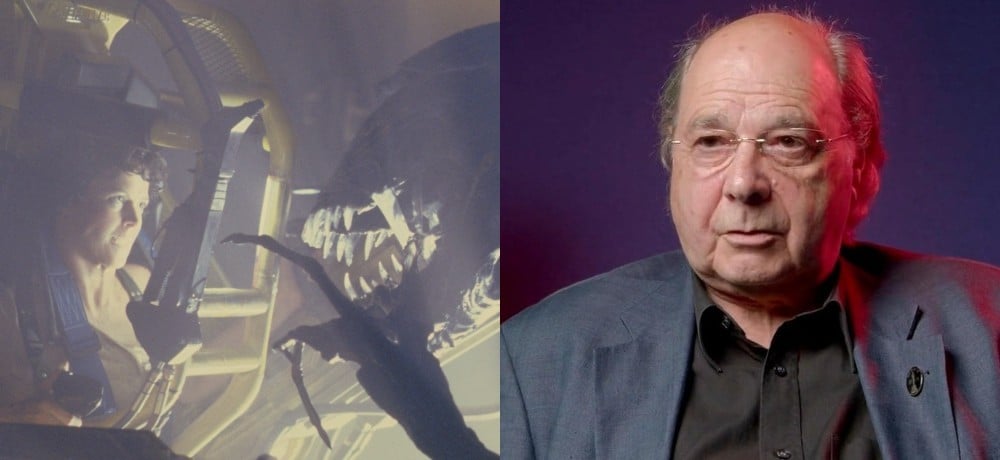
Aliens is a “perfect organism,” an excellent example of so many different artists coming together to make something that we’re still admiring 40 years later. Of course, fans and critics jump to praise the film’s visuals, but equally impressive are the sounds of Aliens. Chief Dubbing Mixer Graham V. Hartstone was nominated for an Academy Award for his work on the film, and he’s also been responsible for working on the sounds of some of your other favorite films, including Hellraiser, Blade Runner, Superman, and multiple entries in the Bond franchise. As part of our celebration of 40 years of Aliens, I spoke with Hartstone about working with James Cameron, creating the sounds for the Alien Warrior, and his advice for those looking for a career in sound engineering for film:
I was curious about how you got involved with this production, since you were involved in quite a few UK productions at the time. Did you know a lot about the project ahead of time?
Graham V. Hartstone: I knew very little ahead of time. The first thing I knew, I had lunch with Tim Hampton and Gale Anne Hurd, and they talked about mixing at Pinewood. During the conversation, I was asked how long we thought it would take to mix. We took 12 weeks for Superman, and we take about 10 weeks for a James Bond film. So I said, “About 10 weeks, I guess, probably.” And they came straight back and said, “Well, in LA, they’ll do it in seven weeks.” I don’t know how true that was, but I said, “Okay, well, we’ll do it in seven weeks.”
And we did it. Funnily enough, when Gale and Jim took [the film] to their first screening in LA, the reaction was, “How the hell did you do that in seven weeks?”
How familiar were you with Alien and what impact did the approach taken on that film have on how you approached the sound of Aliens?
Graham V. Hartstone: The original Alien was a fantastic film, but Aliens was a completely different sort of film. The time schedule was obviously a great deal of pressure, but, as ever, I put everything I had into the movie.
Looking at past interviews from James Cameron, and the people he’s worked with, he wears a lot of hats and he’s an expert in a lot of different areas, but he has specifically mentioned that he did not know a lot about sound mixing. And so he said he learned so much from you and relied on you and your expertise. Can you talk about that collaboration with him?
Graham V. Hartstone: I was very, very proud of that praise from Jim. Goodness me, from Jim Cameron, that’s amazing praise. I learned, I forget who told me now, may have been Gale, that he was not at all happy with the sound mix on The Terminator. So I got a print to run in our preview theater at Pinewood, and it was pretty damn good, but it was Academy mono, and I had 70mm six-track stereo to play with, so that made life a lot easier. And in fact, he was quite impressed with everything we did from day one.
One thing I wanted to ask about was the specific vocalization for the Alien Warrior when it gets shot, and a lot of fans have debated what went into making that sound. Can you talk about the making of that iconic vocalization?
Graham V. Hartstone: I’m afraid I can’t remember the exact animals other than I know there were pigs and some of it was human sounds. There might’ve been tigers, but basically it was all highly processed and mixed together to try and represent the alien’s emotions and sound scary, but everything was pitch-shifted and mixed together.
Can you talk a little bit about your collaboration with Don Sharp and with James Horner and other folks to make that final mix?
Graham V. Hartstone: Yeah, let me start with Don Sharp. Don’s tracks were all ordinary sounds, so we had to make them spacey. I mean, I used to use a Publison harmonizer to process sounds. One of my things about a sound effect is I never really like a single sound. So for example, when the ship was approaching at the minute, there’s like a sonar beep. Well, I was given one sonar beep, but that’s no good to me. So I made it go beep, beep, beep, beep from the surround to the screen. So it’s moving and it’s got more than one sound. When the big door shuts in the top of the hangar of the ship there, it’ll have one clank, but that’s not good for me. So with the Publison, I would pitch down and time shift so it went clunk, clank, clonk… three sounds for one thing happening because one can be easily missed.
Looking back at Aliens 40 years later, people are still talking about it, people are still watching it. Why do you think that this movie is so special and that it has stood the test of time?
Graham V. Hartstone: It’s a fantastic story and the pace moves so fast and the tension just builds, but in waves, which is a bit like what we have to do with the soundtrack. We can’t just be loud all the way through. And Jim understood that very much so. The film was shot and edited in such a way that you could go in waves like that, “sawtooths,” as I call them. We build up to the tension and then we go quiet. There’s a pause while something else starts to happen, and the whole story goes through like that. And the first time I sat down and watched the movie, which was just in its very early stages, I was totally engaged in it from the beginning to the end and I thought, “This is a winner.”
It amazes me all of the films that you have been a part of from: the Bond movies, to Hammer Horror, and beyond… it’s incredible. Looking back at your career over the years, what are some of your favorite productions that you’ve been a part of?
Graham V. Hartstone: I’ve had a very privileged career working in the sound department at Pinewood Studios, and it all worked well for me because I really loved going on location and learning about outside shooting. And then when I get into post-production, that is the actual final creative process. When it leaves the mix theater, there’s nothing else that happens apart from bits of color grading. So that was a really satisfying time. I’ve always enjoyed working best with directors who are sound-conscious, who realize how important sound is. I mean, in no particular order: Martin Campbell, David Lean, Ridley Scott, Stanley Kubrick, and, of course, Jim Cameron.
What would be your advice for someone that’s looking into a career in sound engineering for film?
Graham V. Hartstone: I teach at the National Film School in England and other schools around Europe. And I tell my students that, above all, the most important thing is to support the story. That relies on clear, intelligible dialogue for one thing, and collaboration with the whole crew. Everybody’s working [toward] the same end of the film, so you’ve got to collaborate with everybody. And I tell the students, “Don’t ever turn a job down because it’s a people business. Just get to know as many people as possible. And when you’re on a job in a junior position, try and think ahead about the next thing that’s going to be needed in the process and see if you can make a bit of preparation for the sound editor or the editor so that they’ll appreciate that and they’ll probably want you on the next project.”