American Hostage Series Premiere Review: Somehow, This Story Is More Relevant Than Ever

Some true stories make you wonder why anyone bothered dramatizing them, and then there are stories like Tony Kiritsis and his infamous dead man’s line that get the treatment again and again.
I’d already watched the independent film. That sent me to the documentary.
That sent me down the internet rabbit hole, because once you start reading about a guy wiring a shotgun to a mortgage broker’s head and parading him through the streets of Indianapolis, it’s surprisingly difficult to say, “Well, that’s enough of that.”
So, do we really need American Hostage, an eight-hour series about a story that’s already gotten plenty of attention?
After American Hostage Season 1 Episodes 1 and 2, I’m going with yes.
Because as utterly bonkers as the Tony Kiritsis story remains almost 50 years later, American Hostage has found another way into it.
This isn’t merely a story about a furious man who kidnapped Dick Hall of Meridian Mortgage Company because he believed the Hall family had screwed him over.
It’s also about the day a local radio reporter named Fred Heckman answered the phone and discovered that he wasn’t going to be reporting the biggest story in Indianapolis.
He was going to be part of it. And, oh boy, does that hit differently in 2026.
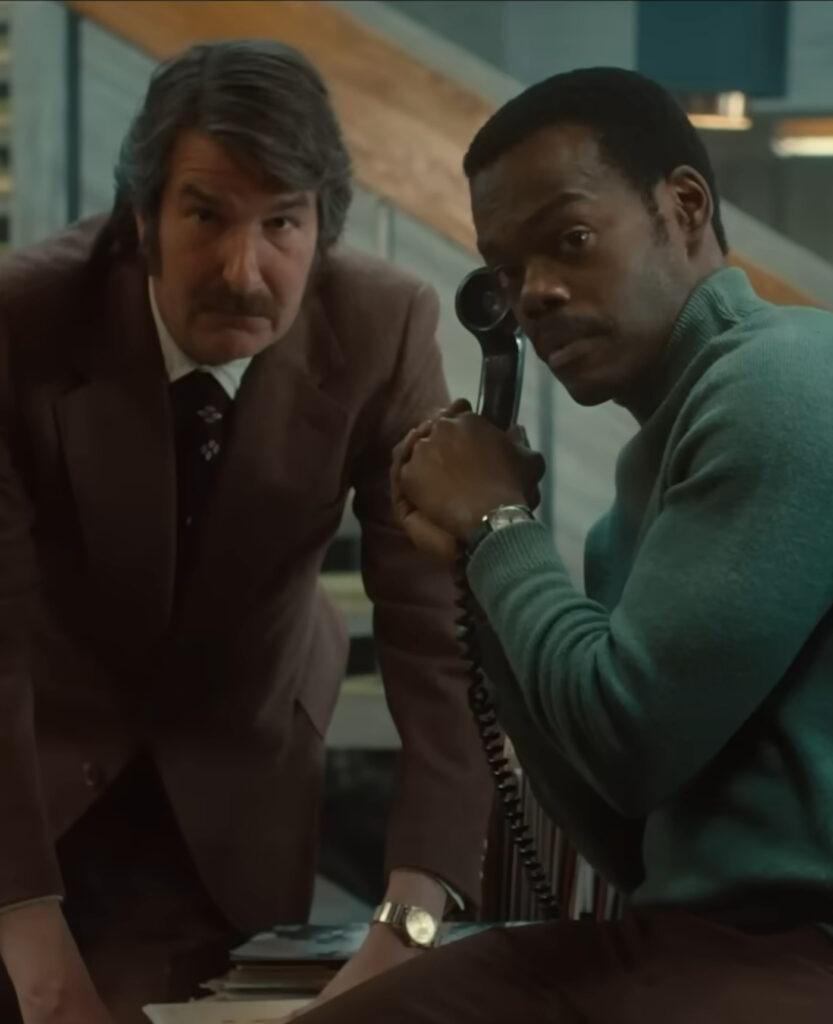
Jon Hamm‘s Fred is already having something of an identity crisis before Tony ever calls him. After 22 years in Indiana and the success of his “My Town Indy” segment, CBS is interested. New York is beckoning. So is more money.
But Fred considers himself a hard-news guy, and there’s something uncomfortable about the prospect of moving away from the kind of journalism that made him the most trusted voice in his community in the first place.
Then Tony calls.
Suddenly, Fred has the kind of story every journalist dreams about, except the story has specifically requested him, has a shotgun wired to another man’s head, and says “fuck” often enough to give everyone at this family-oriented radio station heart palpitations.
Tony wants to go live. Why Fred? Because people trust Fred Heckman. “If you say it, they’ll believe it.”
That’s one hell of a responsibility to drop into a journalist’s lap. It’s also where American Hostage starts becoming about much more than Tony and Dick.
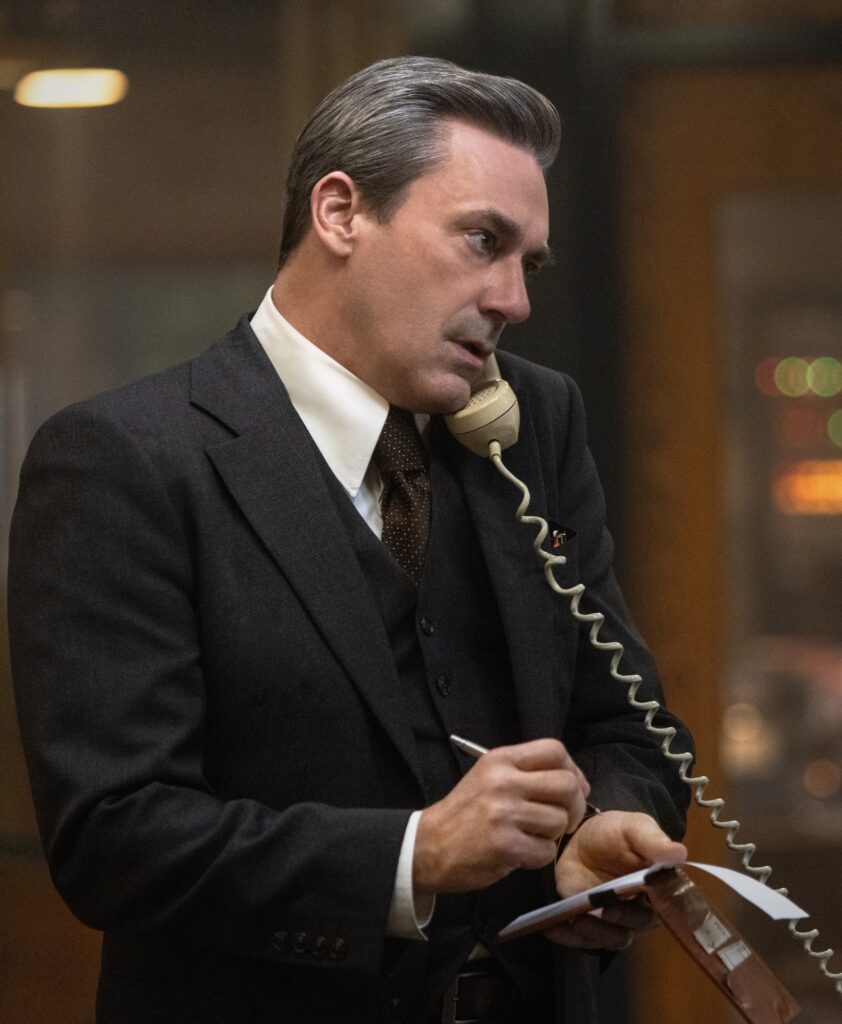
We’re watching this unfold in a media environment that’s almost quaint by modern standards. Somebody has to adjust the television antenna in the newsroom. Reporters are calling in news briefs from pay phones. Tony needs Fred because Tony doesn’t have a platform of his own.
Today, Tony could be livestreaming before Fred ever knew something was happening. He could post a manifesto, a YouTube channel, TikTok account, Instagram following, podcast, Substack, or whatever fresh hell we’ve invented since I started writing this sentence.
He wouldn’t need the most trusted voice in Indianapolis to tell people he’d been wronged. He could tell them himself.
And within minutes, strangers who knew absolutely nothing about Tony, Dick, Meridian Mortgage, or commercial real estate would be explaining the entire situation to everyone else with tremendous confidence.
Tony’s stunt feels almost like social media before social media existed.
He has a grievance. He believes the system is rigged. He doesn’t believe the people with power will listen to him through conventional channels, so he does something so outrageous that they have no choice.
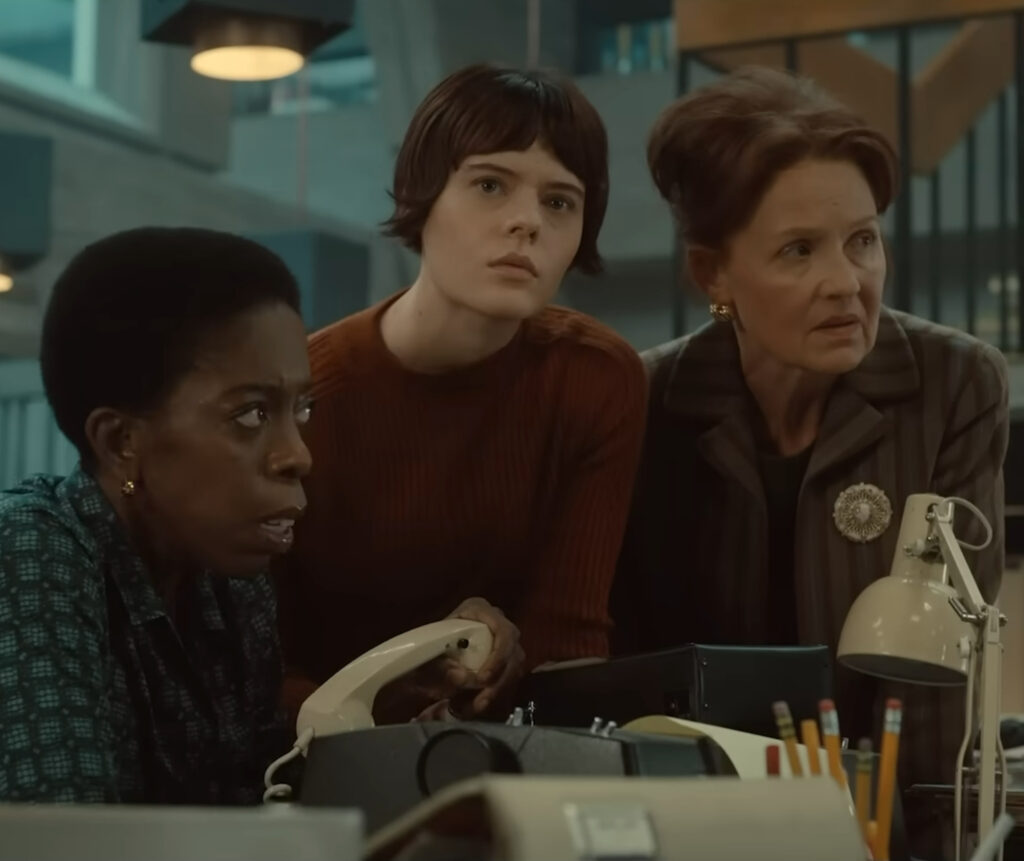
And then he needs an audience. That’s where Fred comes in. And it puts Fred in an impossible position almost immediately.
Legal is terrified. Station manager Jerry is contemplating the FCC, advertising, revenue, and presumably whether there is enough alcohol in Indianapolis to survive the day.
Fred doesn’t give a damn about revenue. This is news. “You can’t say this isn’t news,” he deadpans. Well, no. You certainly can’t.
@media (max-width: 768px) {
.tvf-google-cta {
padding: 22px 14px !important;
}
.tvf-google-cta p {
font-size: 22px !important;
line-height: 1.25 !important;
margin-bottom: 16px !important;
}
.tvf-google-cta a {
font-size: 14px !important;
padding: 10px 18px !important;
border-radius: 34px !important;
line-height: 1.3 !important;
}
}
Add TV Fanatic as a Trusted Source on Google!
Get More of Our Coverage!
But what happens when covering the news begins affecting its outcome?
“The moment we do something to save someone’s life, we are in the story. We lose our way as journalists,” Ben Hairston reminds him.
That was once Fred’s line in the sand, and American Hostage wastes very little time kicking sand all over it. Fred may believe in journalistic distance, but he also can’t stand by and let Dick Hall die.

Ben knows that before Fred does. Fred apparently thinks he’s been removing cheese from mousetraps around the station without anyone noticing because he can’t bring himself to kill a mouse. Ben knows about the cheese.
Everyone knows about the cheese.
And if Fred Heckman can’t let a mouse die, he’s sure as hell not going to let Dick Hall die to preserve some pristine concept of journalistic objectivity.
That’s where American Hostage gets really interesting.
Fred’s not chasing celebrity, he’s not trying to manufacture a viral moment, and he’s certainly not hoping Tony will turn him into the story. He wants to report the news.

But Tony chose him precisely because of what Fred represents, and the moment Fred answers that phone, his credibility becomes part of Tony’s plan.
By the end of “McMahon, Martinis, and Madness,” CBS is sending a crew to Indianapolis.
Because now, Fred IS the story. So much for New York. When Ben told him the funny thing about lines is that they’re always moving, Fred thought he was better than the line.
He thought he could stand behind it, maybe toe it a little, and still remain impartial. But when the victim at the end of the dead man’s line is a fellow church member and father, remaining impartial is a feat not many could accomplish.
There’s something fascinating about watching that happen from our current vantage point because we’ve long since obliterated the line Fred is desperately trying to protect.
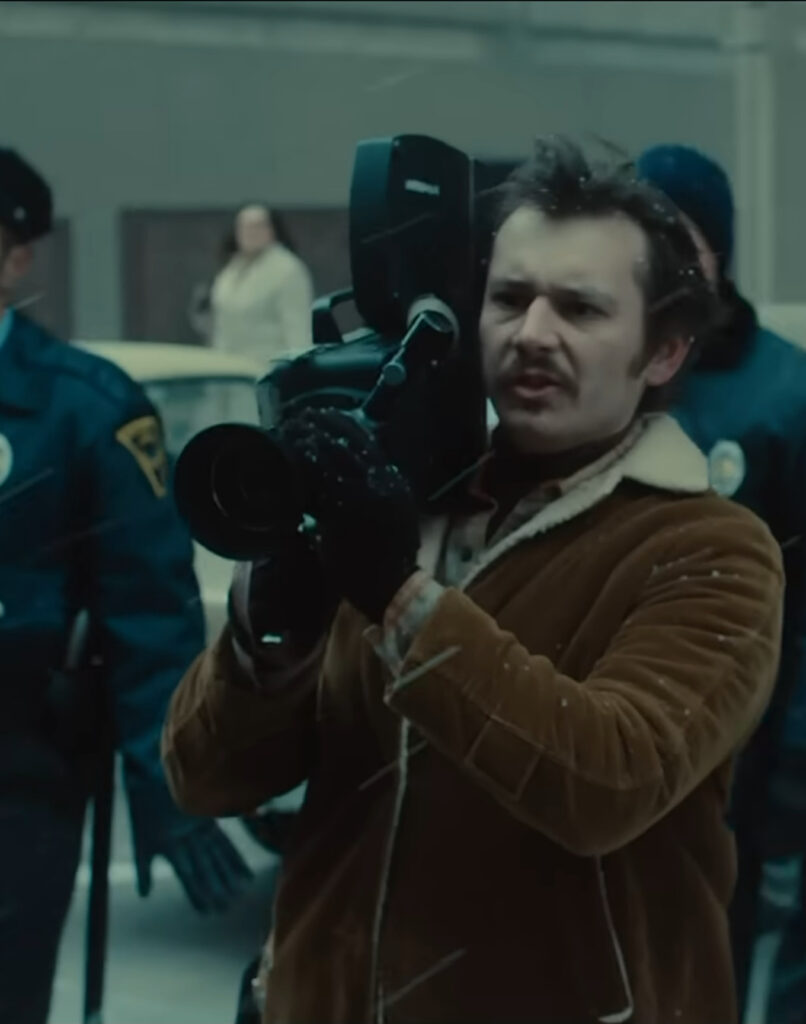
News is entertainment. Entertainment becomes news. Reporters become personalities. Personalities become stories.
Stories are selected partly because people will watch them, click them, share them, scream about them, or make reaction videos about someone else’s reaction video.
Everybody gets to be Walter Cronkite now, provided Walter Cronkite was broadcasting from his kitchen while yelling at people in the comments.
And people in the comments would obliterate you if you stood back, impartially, and let an innocent man die without doing something to help.
American Hostage is looking back at an earlier point in this evolution, when the people inside the newsroom could still be horrified by the possibility that a man’s potential death might also be fantastic for ratings and maybe not rise to the occasion to exploit it.
And that’s where the show’s satirical streak becomes important. This could have been oppressively serious. Thankfully, it isn’t.

American Hostage has an almost Fargo-like sensibility at times, with music that occasionally evokes Dexter and an entire collection of people responding to an insane situation with exactly the kind of profanity and absurdity such an insane situation probably deserves.
Discovering somebody has left a car door open with the engine running, allowing Tony to abscond with Dick in tow, the police chief announces that he’s going to find the culprit and throw them “down a fucking well.”
There is a man walking around with a shotgun attached to another man’s neck, so he’s not trying to get to the bottom of the parking violation. He’s realizing in real time how quickly one small error can completely upend a situation.
Tony himself can be horrifying and hilarious within seconds of each other.
When Tony encounters the growing circus following him as he walks Dick down the street, he demands, “What is this? The Macy’s Day Parade, goddamn it?”
Giovanni Ribisi absolutely disappears into the role, capturing a man who is angry, wounded, theatrical, profane, and utterly convinced of the righteousness of his cause.
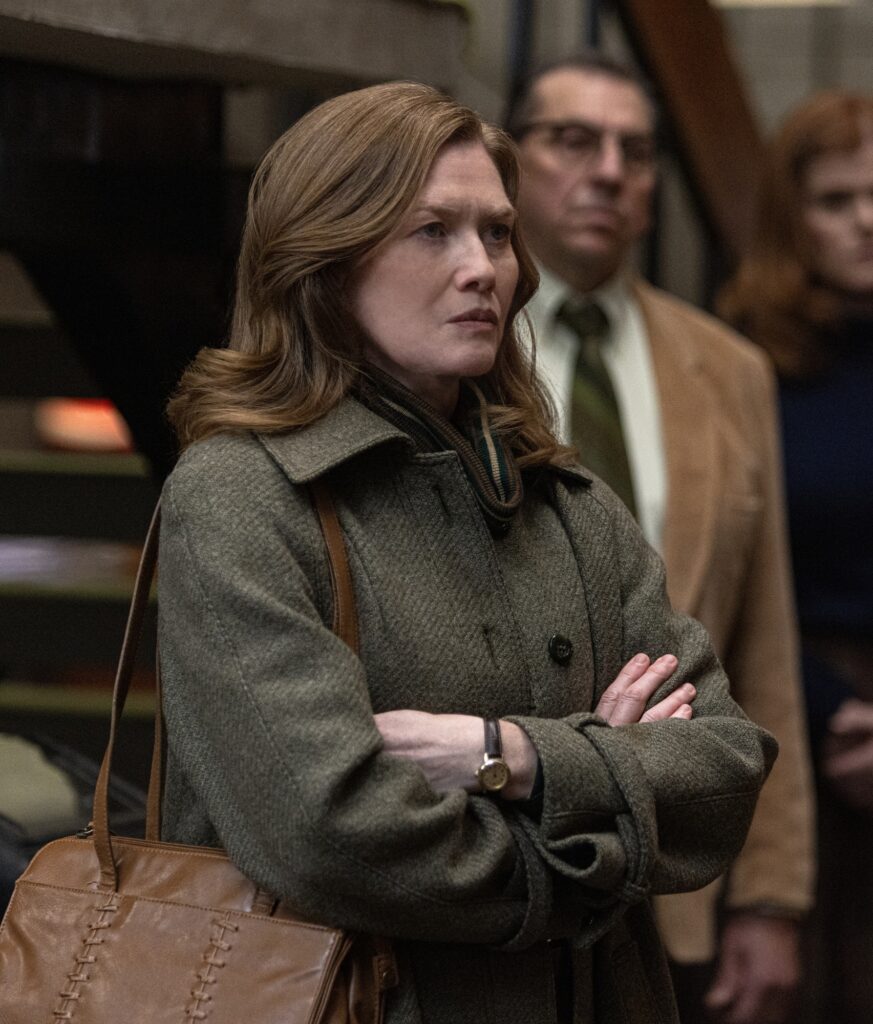
Tony doesn’t believe he’s a lunatic. He believes he’s a man who worked like a dog, got cornered by a rigged system, and finally decided that if nobody was going to listen, he’d make damn sure they did.
And American Hostage doesn’t require us to agree with him to understand why Fred wants to hear him out.
That’s Fred’s secret with Tony. Treat him like a human being. Ask questions. Listen. Show respect. It’s remarkably simple, and it works. It also lets the series begin unpacking the grievance beneath the spectacle on American Hostage Season 1 Episode 2.
Tony believes the Hall family and Meridian Mortgage deliberately set him up to fail. He had 17 acres he dreamed of developing into something profitable, and he believes they intended to foreclose, scoop it up cheaply at a sheriff’s sale, and profit from his failure.
The financial details matter, but Tony’s demands reveal that this isn’t solely about money. He wants immunity, lawyers, and something much more personal. He wants M.L. Hall to apologize to him.
That’s a problem, because everyone keeps asking where M.L. is, and nobody seems particularly capable of producing him.
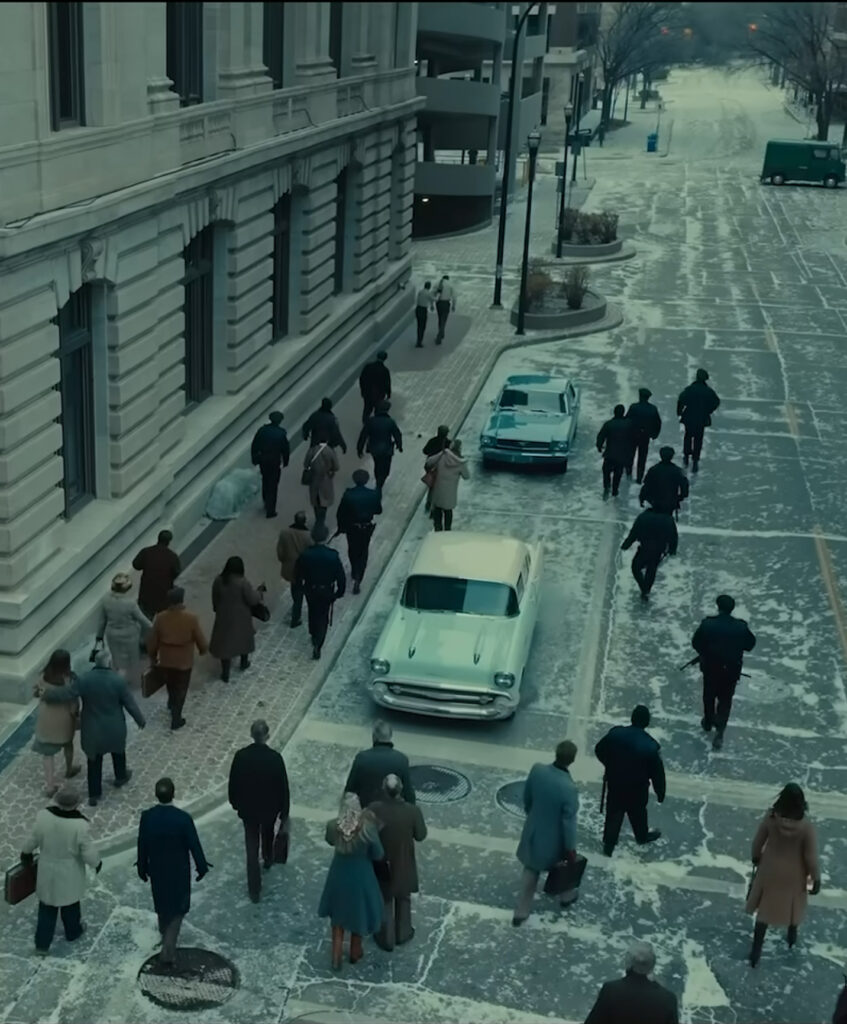
In the midst of the melee, someone roars, “What’s the matter with these people? At this rate, we’ll be here until Easter. And someone will be dead. And I don’t mean Jesus.”
See? There is no way you’re getting through this story without laughing.
Poor Dick, meanwhile, remains remarkably compliant for a man spending his day attached to the business end of Tony’s homemade death contraption.
Kristoffer Polaha hasn’t had nearly as much room to explore Dick through the first two hours, but we get flashes of the person beneath the hostage.
And the more we learn about the Hall family, the more interesting Dick’s position within all of this becomes.
Tony may have taken Dick hostage, but Dick isn’t necessarily the person Tony really wants. The people Tony wants to answer for what happened seem remarkably comfortable letting Dick do that for them.

That’s something I’m eager to see American Hostage explore further.
But Tony also understands something about Fred before Fred fully understands it himself. “I chose you for a reason. You’re a part of my plan all along.”
Fred was there during the darkest days of Tony’s life without even knowing it. That’s the extraordinary part of this relationship.
Fred isn’t merely a convenient radio personality Tony happened to recognize. His voice meant something to Tony. His reputation meant something.
That kind of communal trust in journalism feels almost alien now. And maybe that’s another reason this story remains worth telling.
Tony Kiritsis didn’t just want attention. He wanted to be believed. There is a difference. And somehow, Tony knew that Fred would humanize the event, playing right into Tony’s hands.
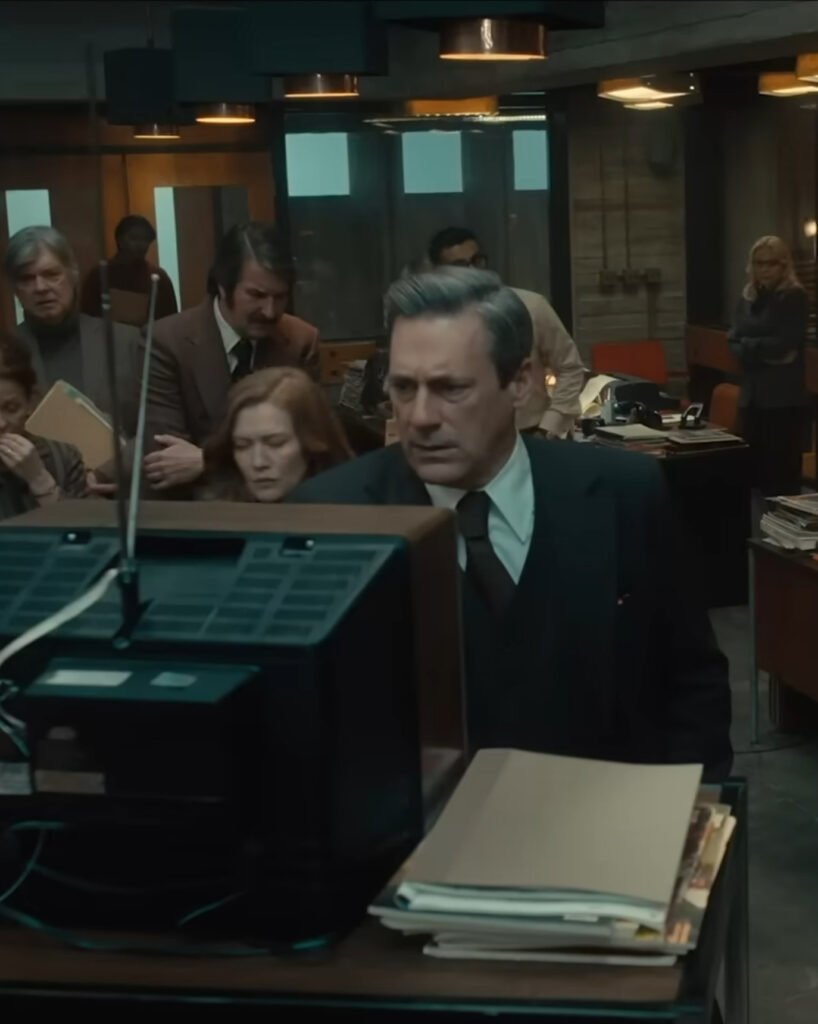
American Hostage arrives after other projects have already revisited this story, but it has eight hours to examine all the strange little pieces around the dead man’s line:
Tony’s grievance, Dick’s family, Fred’s career, the changing media environment, and what happens when reporting the spectacle becomes part of creating it.
The story was already sensational. American Hostage doesn’t pretend otherwise. Instead, it seems willing to ask why we can’t stop looking.
Nearly 50 years later, we have infinitely more ways to make ourselves heard, infinitely more opportunities to become the story, and an entire culture built around capturing 15 minutes of attention before somebody else takes our place.
Tony needed a shotgun, a hostage, and the most trusted man in Indianapolis. Now all you need is Wi-Fi. Progress! Or not.
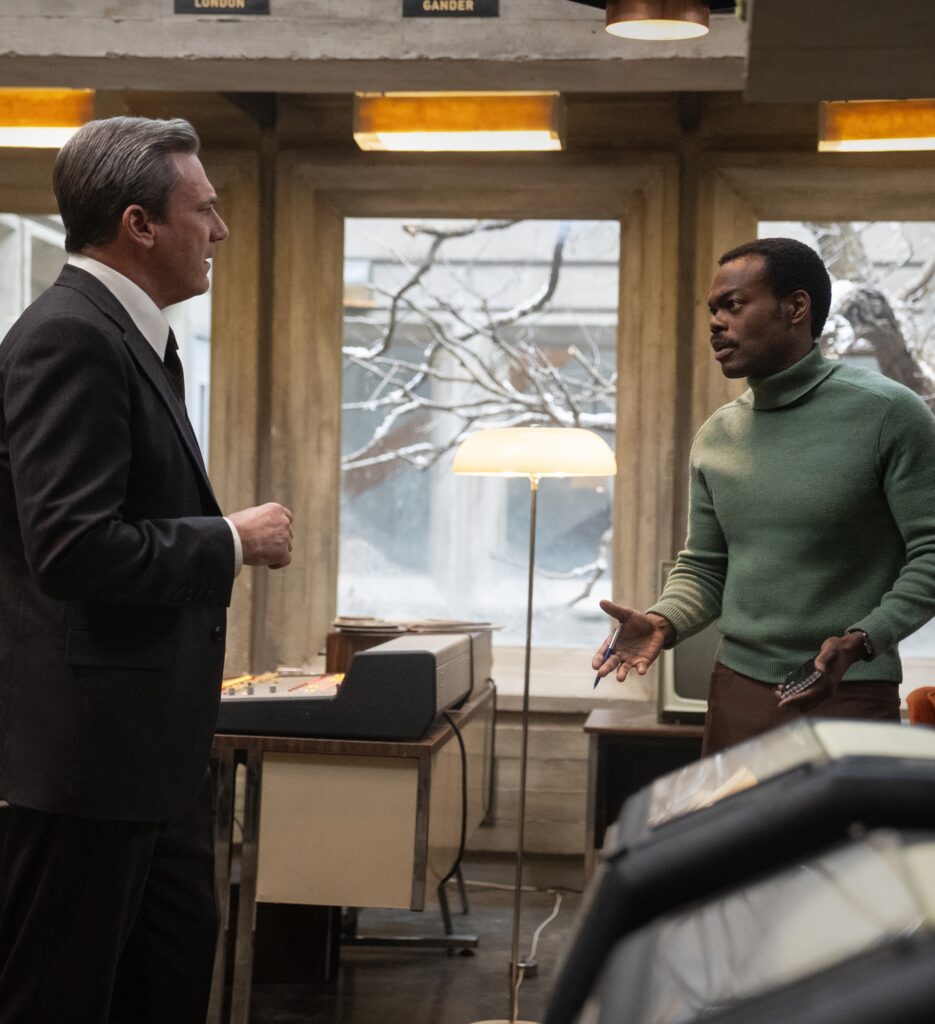
We’ve lost something in the middle of all of this. The public’s right to know and understand a story without sensationalizing it.
At this point, even our AI picks a side. The best I can say is that if you’ve got the right attitude, you can at least wade through the muck to find the truth.
So, at least we have more to sift through. But I can’t help but wish for simpler days past, and by the time American Hostage Season 1 is over, I bet everyone in Indianapolis in 1977 will feel the same.
But what about you?
What did you think of the premiere episodes? Can you believe that something from so far in the past can still feel so relevant today? Hit the comments with your thoughts.
-

The Westies’ Tom Brittney and Sarah Bolger Explain Why Jimmy and Bridget’s Secrets Keep Them Together
Tom Brittney and Sarah Bolger dig into Jimmy and Bridget’s unusual relationship, their shared secrecy, and what may come next on The Westies.
-

Jon Hamm’s American Hostage Takes Another Run at One of the Strangest True Stories Ever
Jon Hamm leads American Hostage, MGM+’s new take on the bizarre Tony Kiritsis case, with eight episodes to dig deeper into the true story.
-

The Westies Season 1 Episode 4 Review: Favors and Funerals
The Westies Season 1 Episode 4 tests loyalties again as individual agendas threaten group fealty, promising the breaking point is near.
The post American Hostage Series Premiere Review: Somehow, This Story Is More Relevant Than Ever appeared first on TV Fanatic.