Julie Newmar’s Star Trek Episode Originally Had A Much Darker, More Complex Ending
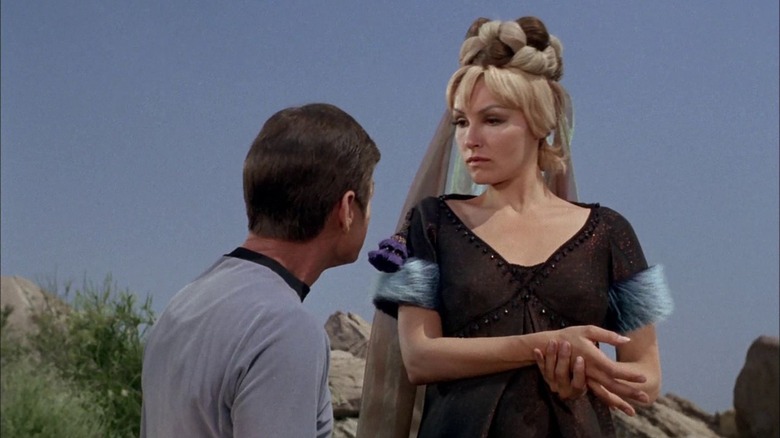
In 1967, Julie Newmar — who was already well known for her slinky portrayal of Catwoman on another hit 1960s TV show, “Batman” — beamed her way into the 2nd season of the original “Star Trek” series. Her character made it to the end of her episode, too. But if writer D.C. Fontana had her way, that ending would have been far more tragic.
In “Friday’s Child,” Captain Kirk (William Shatner), Spock (Leonard Nimoy), and Dr. McCoy (DeForest Kelley) must protect Eleen, the pregnant widow of Capella IV’s slain leader, from a usurper. The broadcast episode ends on a triumphant, maternal note: After McCoy delivers her baby boy, Eleen — who was initially resentful of her pregnancy — gains a newfound maternal instinct and claims leadership as regent for her newborn son, whom she affectionately names “Leonard James Akaar” after McCoy and Kirk.
But originally, Eleen was never meant to make it out of “Friday’s Child” alive. Because Capellan culture places greater intrinsic value on male heirs than women, Eleen was to give her child to her captors in hopes of escaping, but they would execute Eleen anyway. During an interview with the Television Academy, Fontana revealed why her script explored a much darker side of motherhood. “I wanted to tell a story about a woman who would even use a newborn child to save herself,” Fontana said. “… I had a good time creating that culture, that society that didn’t especially revere women except as broodmares.”
D.C. Fontana and Gene Roddenberry clashed over the ending
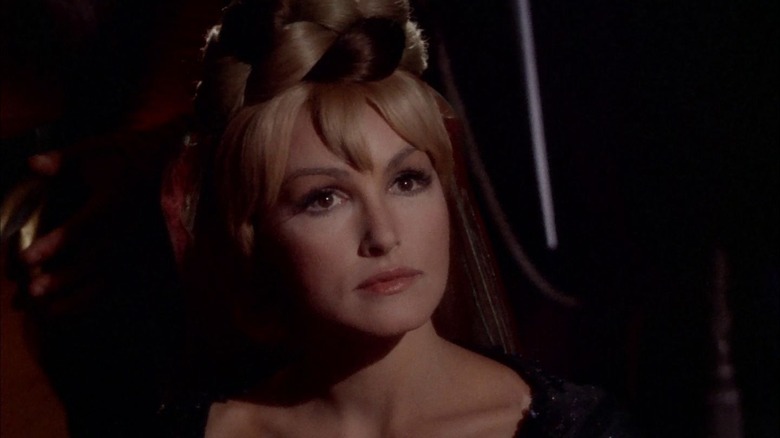
Yet when D.C. Fontana presented her script, she bumped heads with “Star Trek” creator Gene Roddenberry, who held a far more traditional view of motherhood. “I really wanted a very strong woman, and we got Julie Newmar, who was great,” Fontana said. “It was really about a woman who was willing even to use her child to serve herself.”
Much to Fontana’s dismay, Roddenberry changed that ending, leaving her very unhappy with the ending that eventually made it to the small screen. “I don’t think all women are mommies, and I don’t think all women love their children. I mean, just look at the news,” she argued.
Fontana pushed back and explained her personal views to Roddenberry but ultimately conceded to her boss. “He regarded women a different way … women were mommies, naturally, and they all love their children,” Fontana recalled. “I didn’t have any children; I didn’t want any children. So, to be honest, I didn’t have that view.”